
20260702163842.jpg)
20260702163018.jpg)
20260702163150.jpg)
20260702163726.jpg)

20241209101725.jpg)
20241126164701.jpg)
20250826143404.jpg)
20231130105352.jpg)
20231130105004.jpg)
20231130105205.jpg)
20231130104430.jpg)
20250826153442.jpg)
20250826150224.jpg)
20221018112845.jpg)
20230522163722.jpg)

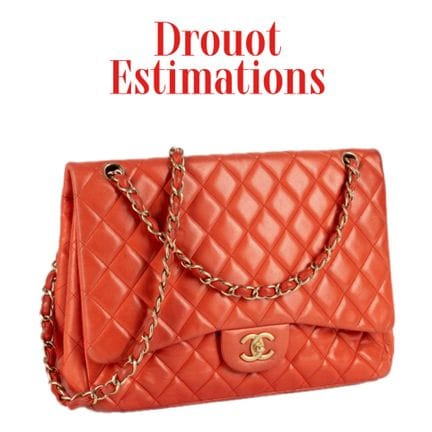

Estimates
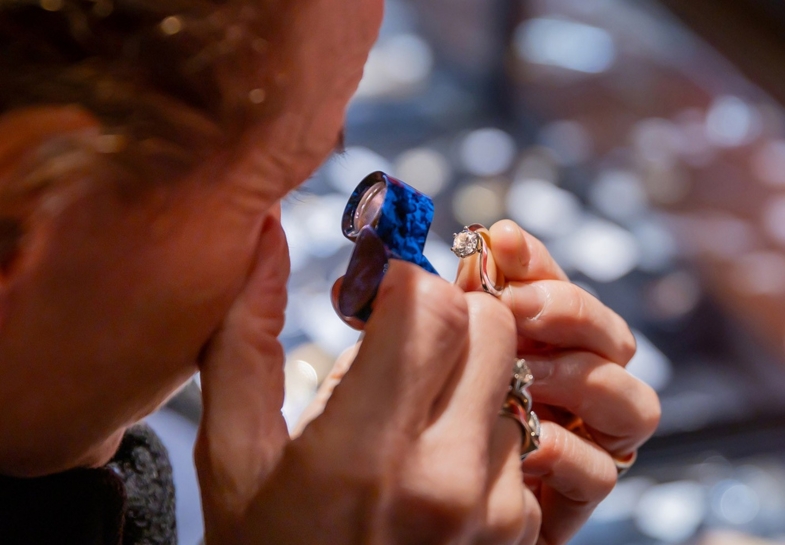
Online Estimate
In-Home Estimate
Appraisal at Our Office
Request a free appraisal on our website! Our experts are available to appraise all types of items: jewelry, paintings, furniture, works of art, and much more.
You can also visit our offices without an appointment for a complimentary verbal appraisal, or schedule an appointment for an in-home inventory.
Our Best Auctions
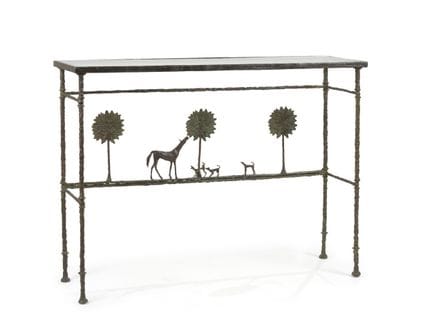
32 - Diego GIACOMETTI (1902-1985) Sculptural console table model La Promenade des amis. Rectangular top in thick glass slab set in a bronze structure with a brown patina shaded with green, forming four legs with splayed feet linked by lateral and longitudinal struts, one of which is decorated with trees, dogs and a horse. Model created in 1976. Signed "Diego" in capital letters and bearing the artist's monogram stamped on one of the struts. H. 89 cm; W. 122 cm; D. 36 cm. Wear, rubbing, slight cracking on the back of the tree in the center of the console. This work has been authenticated in accordance with the process established by the Diego Giacometti Estate. A certificate of authenticity dated March 5, 2026 will be given to the purchaser. Promenade des amis is amusingly explained by Diego, "It was for a client who was doing sales for animal protection. So I thought of this, La Promenade des amis: a horse with three little dogs, one of which is watering the tree and the other is sniffing it. One of my customers made me take it down. It bothered her: "But dogs are all the same," I replied. Bibliography: Michel Butor, Diego Giacometti, Édition Adrien Maeght, 1985, an example of our model reproduced on p. 127. Françoise Francisci, Diego Giacometti, Catalogue de l'œuvre, Vol. I, Éditions Eolia, 1986, an example of our model reproduced on the cover and p. 16. Daniel Marchesseau, Diego Giacometti, Édition Hermann, 1986, an example of our model reproduced on p. 93. Daniel Marchesseau, Diego Giacometti, sculpteur de meubles, Éditions du Regard, 2018, an example of our model reproduced on p. 126. Exhibition catalog, Giacometti une famille de créateurs, Édition Fondation Marguerite et Aimé Maeght, 2021, an example of our model reproduced p. 263. Pierre Passebon, Jacques Grange, Éditions du Regard, 2008, an example of our model reproduced on p. 124.
Result
4,900,000 EUR
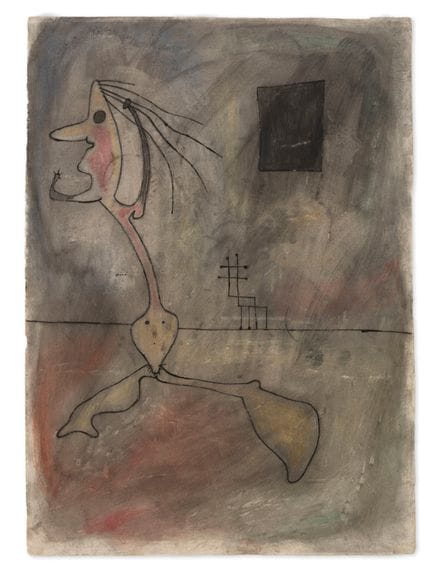
3 - Joan MIRO (1893-1983) Violette's Toilet, July 18, 1938. Oil, gouache and ink on paper. Signed middle left. Countersigned, titled and dated on the back. 77 x 55.5 cm. Provenance : Galerie Pierre Matisse, New-York. Galeries Acquavella, New-York. Seibu Collection, Tokyo. Galerie Lelong, Paris. Exhibitions : Yokohama Museum of Art, 1992, Joan Miró. Centennial Exhibition: The Pierre Matisse Collection, n°48 repr. p. 88. Tokyo, Setagaya Art Museum - Nagoya, Aichi Prefectural Museum of Art, n°75 repr. p. 136. Bibliography: Jacques Dupin, Miró, Flammarion, Paris 2024, n°243 p. 221. Jacques Dupin and Ariane Lelong-Mainaud, Joan Miró. Catalog raisonné. Drawings, Volume II: 1938-1959, Daniel Lelong and Successió Miró éditeurs, 2010, described and reproduced as n°846 p. 34-35. An ADOM certificate, dated June 26, 2001, will be given to the buyer.
Result
365,000 EUR
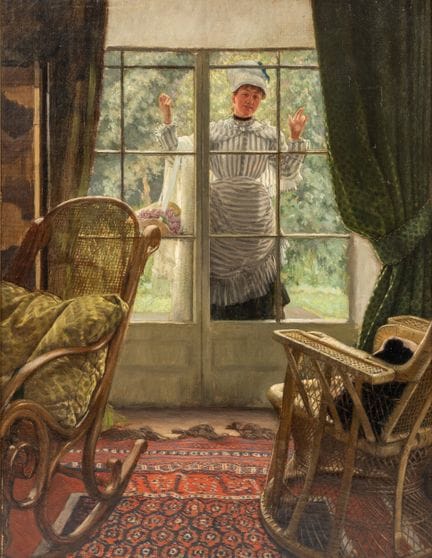
80 - James TISSOT (1836-1902) Woman at the window, circa 1874-1875. Oil on canvas. Signed lower right on the caning of the armchair (possibly reported). 59.5 x 46 cm. Related work: Drypoint in reverse, two copies are preserved, one at the BNF (ref DC310bj,76c76039). We would like to thank Madame Krystyna Matyjaszkiewicz who kindly confirmed the authenticity of this painting. A copy of the specialist's authentication letter will be given to the buyer. Commentary: In 1872, Tissot, based in London, sold a number of paintings at good prices. The following year, he acquired a house in the St John's Wood district of the English capital. He soon had an extension built to serve as his studio. The stage is set at the entrance to this studio, on the garden side. Numerous objects are characteristic of the painter's studio and serve as backdrops for many of his paintings: a rocking chair, carpets and cushions cushions, a Japanese screen that the painter collected. The young model is dressed in an outfit that can be seen in other works by Tissot, circa 1874-1876 (white summer bonnet with blue ribbon, gray, striped bodice with matching overskirt and cape). Tissot frequently used the technique of depicting a figure looking directly at the viewer to engage the viewer. Here, the young woman knocks on the French window, pressing her nose against the glass in an attempt to make out a presence inside the studio. Woman at the window was etched by Tissot. Only two trial proofs are known to exist (Bibliothèque nationale, Paris and Art Gallery of Ontario, Toronto). The etching, inverted in relation to the painting, is contemporary with another etching of the same format, Spring Morning (100 copies). Both mark a period when Tissot devoted himself seriously to etching, after his paintings were rejected at the Royal Academy's April 1875 exhibitions. Our painting possesses all the painter's characteristic qualities: feminine elegance and youthfulness, preciousness of setting and model's attire, a snapshot of a moment of grace and beauty beauty from everyday life. Biographical details: After an early career devoted to biblical and literary subjects, Tissot's career took off with the success of his portrait of Mademoiselle L. L, shown at the Paris Salon in 1864. He received a number of commissions, including the group portrait, Le cercle de la rue Royale, 1868. Henceforth, Tissot was the portraitist of feminine beauty and elegance, of aristocratic bearing and refinement. After an unfortunate engagement with the Communards in 1871, he emigrated to England. During his London period, he produced ambitious compositions with numerous figures (The Ball on a Boat, London, Tate Gallery). Nautical parties, aristocratic picnics and ball scenes bear witness to the evolution of women's fashion, sometimes with a taste for exaggerated turns of phrase. Tissot also suggests an intimate exchange between couples, his elegant ladies embodying "the unfathomable feminine mystery". Tissot made several trips to Palestine, landscapes he used in his illustrations for La Vie de N.-S. Jésus-Christ. The publication of his engravings was a considerable financial success for Tissot. He was also interested in the technique of cloisonné enamels, influenced by the Japanese fashion of the early 1880s.
Result
240,000 EUR
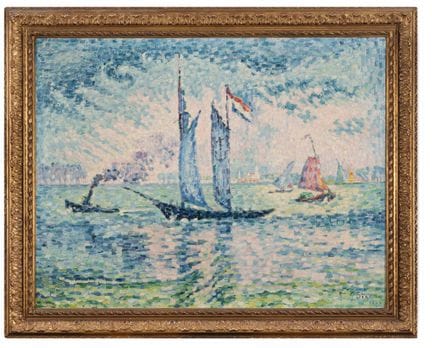
3 - Paul SIGNAC (1863-1935) Pilot of the Meuse, 1924. Oil on canvas. Signed and dated lower right. 50 x 65 cm. Attached are nine typescripts by Edmond Sussfeld, three autographed letters signed by Paul Signac, two autographed letters signed by Paul Signac and the invoice from the dealer Léon Marseille. Provenance: Gallery, Léon Marseille, Paris. Collection Edmond Sussfeld. Then by descent to the present owner. Exhibition: Paris, 1930, Bernheim-Jeune, Paul Signac, n°40 reproduced. Paris, 1934, Petit-Palais, Paul Signac, n°35. Viroflay, 1965, Salon du Souvenir de Corot, 13th exhibition. Bibliography : Françoise Cachin, Signac: Catalogue raisonné de l'oeuvre peint, Paris, 2000, no. 565 reproduced p. 323. Related work : Pilote de la Meuse, ink wash preparatory to our painting, probably 1924, private collection. We thank Mrs. Charlotte Hellman-Cachin - Signac Archives, and Mrs. Marina Ferretti-Bocquillon for the information provided. A certificate of authenticity from Mrs. Marina Ferretti-Bocquillon will be given to the buyer. PILOT OF THE MEUSE For "Pilot of the Meuse", Signac returns to a motif explored eighteen years earlier. He elaborated a sober composition, already used in certain ports and seascapes of the 1890s, which translates his desire for order and clarity: a rigorous structure of horizontal and vertical lines is tempered by a few oblique lines (masts of the boats and the inclined chimney of the tugboat - a Signac trademark). In counterpoint, the sails inflated by the wind and the curves of the hulls animate the composition with small dynamic circular rhythms. As for the divided color, laid down in rectangular touches charged with matter and energy, it defines the forms, translates the light, the atmosphere and the movements of this agitated meteorology: the sky is charged with clouds and rains pushed by the winds, the beaches of dark waters alternate with others more lightened by holes of sun, the wind inflates the sails and the fumes of the tugboat swirl. We can also admire the beach of moving water in the foreground, a vibrant and polychromatic checkerboard reminiscent of the contemporary dotted abstractions of a Kupka, even if for Signac (as he reminds us in his book The Subject in Painting), the abstraction of reality must remain within the limits of "decorative harmony. A small format Indian ink wash, identical in almost every respect, exists (private collection) and prepared the painted composition according to his personal method.For "Pilote de la Meuse", we can quote John Leighton's nice words in his introduction to the catalog of the Signac retrospective of 2001 (Paris, Amsterdam, New York): "In the best of his last works, Signac knew how to combine the sensual heritage of his first paintings with the cold rationality of Neo-Impressionism to create an art of an extraordinary chromatic richness and sensitivity". A DOCUMENTED PROVENANCE Few of the works entrusted to us have such a documented provenance. Indeed, we are fortunate to offer for sale with this masterpiece by Paul Signac an important correspondence between Edmond Sussfeld, Paul Signac and Léon Marseille. Nine typewritten notes from Edmond Sussfeld, three signed autograph letters from Signac, two signed autograph letters and the invoice from the dealer Léon Marseille shed light on the multiple steps that enabled the collector to acquire the painting. Sir, Being eager to acquire one of your works, I would be grateful if you could inform me if I could meet you at your studio next Saturday at 2:½ pm. I look forward to hearing from you, Sir, with my sincere regards. Edmond Sussfeld. Sir, I will certainly be pleased to receive you in my studio; but I must inform you that I have no paintings to sell, my paintings being held back by treaties to my dealers; I can only dispose of my watercolors. If in these conditions you persist in your kind intention, I would be grateful to you to advise me and I would wait for your visit next Saturday at 2:½ pm. Please accept, Sir, my sincere greetings. Paul Signac. Dear Sir, Thanking you for the cordiality of your welcome, I hasten to inform you that I passed by Marseille but that, to my regret, I could not find any of your paintings there. Nevertheless, I acquired a watercolor by Saint Pol which was sold to me under the number 3375 and for the price of 900 francs (all framed). I would be grateful if you could let me know, either directly
Result
1,520,000 EUR

13 - Etienne ALPHONSE DINET (1861-1929) Girls looking off into the distance. Oil on lined canvas. Signed lower left. 81.5 x 65 cm. Slightly relaxed canvas. Oil on canvas, signed lower left. 32 x 25,5 in. Provenance: Private collection. We thank Mr Koudir Benchikou for confirming the authenticity of this work.
Result
310,000 EUR
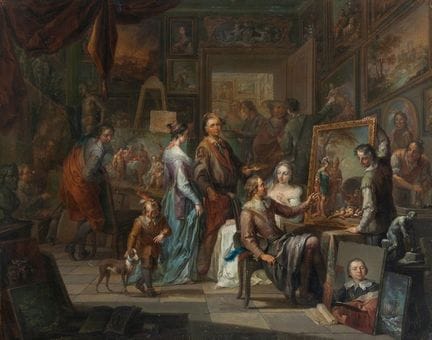
26 - Frans Christophe JANNECK (Graz (Autriche) 1703-Vienne 1761) 1 - L'Atelier du peintre. Huile sur cuivre. Apposé sur panneau. Signé et daté en bas à droite FC Janneck 1748. 40,5 x 53 cm. 2 - L'Atelier du sculpteur. Huile sur cuivre. Apposé sur panneau. 41,5 x 53 cm. Petit manque en bas à droite.
Result
168,000 EUR
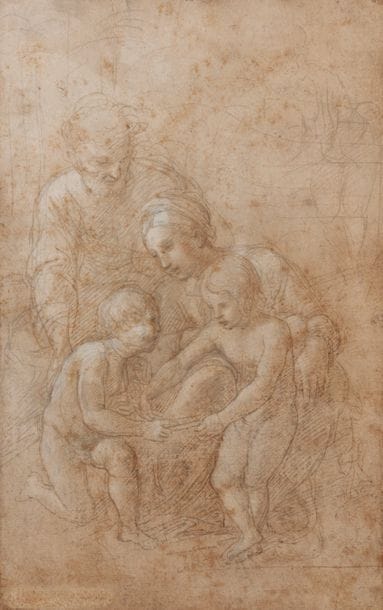
17 - Attribué à Giovanni Francesco PENNI (Florence 1488-Naples 1528) La Sainte Famille avec saint Jean-Baptiste enfant. Pointe de métal, plume, encre brune et rehauts de blanc. Filet d'encadrement. Doublé sur feuille. 19,5 x 12,2 cm Petites pliures; lacunes et rousseurs. Provenance: Collection Théophile Homolle, archéologue, Directeur de l'Ecole d'Athènes (1892-1902), Directeur des Musées Nationaux (vers 1903- 1911), puis Administrateur de la Bibliothèque Nationale (Cf. La réunion des Musées Nationaux 1870-1940, Genèse et Fonctionnement; Paris, Ecole des Chartes, Droz et Champion 1994). D'après une tradition familiale ce dessin aurait été offert à Théophile Homolle par le peintre Léon Bonnat, au moment où il réalisa son portrait. Oeuvres en rapport: 1 - Etude en rapport avec la «Madonna Spinola» conservée autrefois au Palais Vicenzo Spinola à Gênes, aujourd'hui dans une collection privée (Christie's 8 & 9 décembre 1994) attribué à Giulio Romano (1499-1546) en collaboration, pour certains auteurs, avec Giovanni Francesco Penni (Cf. Giulio Romano, Sylvie Ferino Padgen, pp. 70 - 72, 93 & 95 - Electa, Milan 1989). La Madonna Spinola aurait été réalisée à partir d'un dessin issu de l'atelier de Raphaël, ou vraisemblablement, d'après Paul Joannides, à Giovanni Francesco Penni (Cf. The Early Easel Paintings of Giulio Romano, Paragone, n° 425, p. 37. - 1985). 2 -Dessin autrefois à Gijon, en Espagne,détruit en 1936 (Cf. A. E. Perez Sanchez: Catalogue de la Coleccion de Dibujos del Instituto Javanellos de Gijon, n° 126. - 1969).
Result
1,130,000 EUR

75 - Attribué à CARTIER Paris Elégant diadème en or gris (750) et platine (850) de forme bandeau en légère chute, à décor ajouré géométrique de navettes entièrement pavé de diamants taille ancienne ou rose en serti grain perlé, et ponctué de cinq motifs de rosaces quadrilobées centrées de diamants taille ancienne plus importants en serti clos ou grain perlé. L'ensemble sommé d'une ligne de petits diamants taille ancienne en serti griffe. Monture en métal, amovible, numérotée 2232. Avant 1914. Poids total brut: 109,2 g. Poids sans la monture: 97,2 g. Haut.: 3,5 cm. - Long.: 38 cm. Infimes torsions sur la monture. Très remarquable travail de joaillerie. Provenance: Famille aristocratique russe, puis par descendance au propriétaire actuel
Result
470,000 EUR
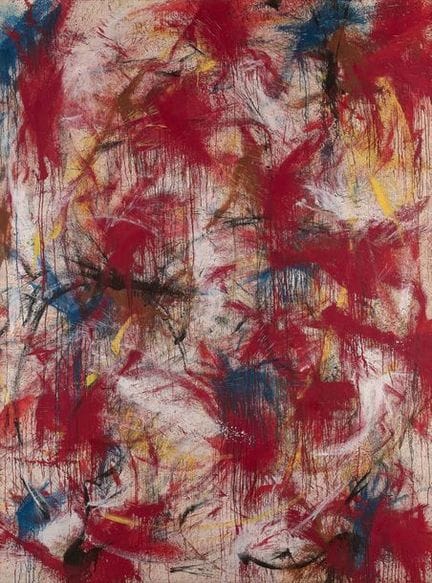
44 - NORMAN BLUHM (1921-1999) Firecracker, 1958. Huile sur toile. Signée et datée en bas à gauche. Contresignée, datée et titrée au dos. 245 x 183 cm. Provenance: Ancienne collection de M. Michel Robinet. Puis par descendance au propriétaire actuel.
Result
250,000 EUR
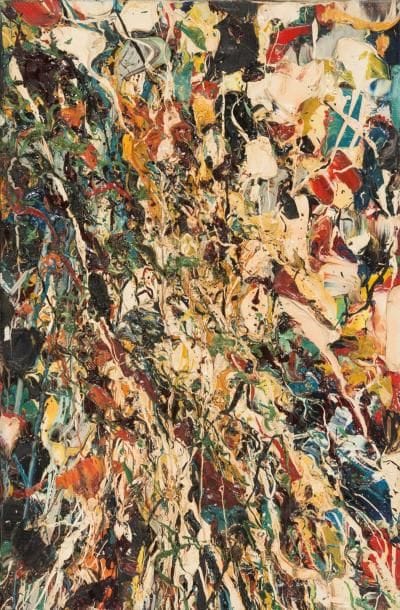
118 - Jean-Paul Riopelle (1923-2002) Composition, 1950. Huile sur toile. Signée et datée au dos. Inscription en rouge au dos de la toile «Riopelle 50» et sur le châssis «Riopelle top». Etiquette collée au dos sur l'encadrement. 34 x 22 cm
Result
300,000 EUR
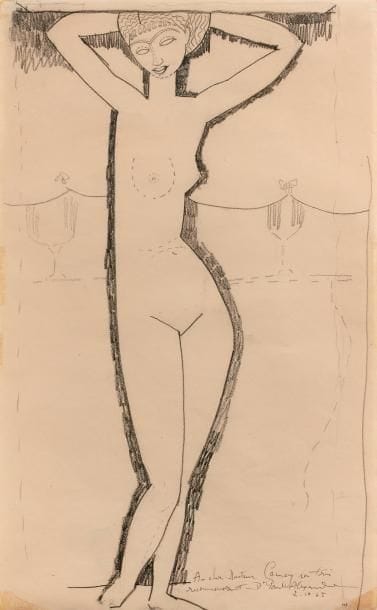
25 - Amadeo MODIGLIANI (1884-1920) Caryatide, 1910-1911. Dessin au crayon gras sur papier. Porte en bas à droite le timbre de la collection Paul Alexandre et numéroté 107 ainsi que la dédicace: «Au cher Docteur Camey son très reconnaissant Dr Paul Alexandre 2. 10. 65.» 42,8 x 26,3 cm. Au dos étude de tête. Provenance: - Ancienne collection Paul Alexandre. - Offert par Paul Alexandre au docteur Camey le 2.10.1965. - Puis par descendance au propriétaire actuel. Exposition itinérante: - I disegni di Modigliani dalla collezione del Dottor Paul Alexandre, Palazzo Grassi, Venise, 5 septembre 1993 - 4 janvier 1994. - Modigliani. La Révélation - Dessins de la collection de Paul Alexandre, Stichting Sint-Jan, Bruges, 16 juillet - 2 octobre 1994. - Modigliani inconnu, Tokyo, Ueno Royal Museum. - Modigliani Inconnu, Dessins de la collection Paul Alexandre, Musée des Beaux-Arts de Montréal, 1er février - 28 avril 1996. Une copie du courrier de Jan Martens, chargé de l'organisation de cette exposition itinérante, passant par Cologne, Londres, Tel-Aviv, Lisbonne, Bilbao, Madrid, Bruges, Luxembourg, New York, et Rouen de 1993 à 1996, sera remise à l'acquéreur. Bibliographie: - Noël Alexandre, Modigliani Inconnu, dessins de la collection Paul Alexandre, Bruges, Albin Michel, Fonds Mercator, 1993-1996, reproduit sous le numéro 106, page 195 et décrit page 199 et figure dans l'inventaire de la collection Paul Alexandre publié en page 451 du même ouvrage (n°43). - Osvaldo Patani, Amedeo Modigliani - catalogo generale, disegni 1906-1920, Milan, Leonardo, 1994, reproduit sous le n°822 p.362
Result
310,000 EUR
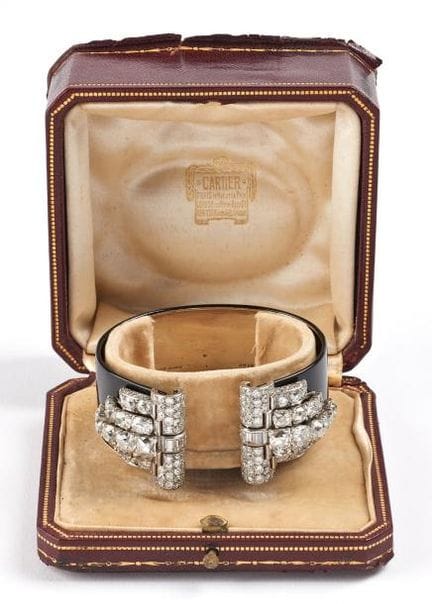
122 - CARTIER Paris Bracelet manchette ouvert formé d'un large bandeau en or gris (750) laqué noir, terminé par deux clips de revers amovibles en platine (850) à motif géométrique entièrement pavé de diamants taille princesse ou brillant ancienne, huit-huit ou baguette en serti griffe, rail ou grain. Signé à l'intérieur du bandeau et sur chaque clip. Traces de numérotations à l'intérieur du bandeau, illisible. Clips numérotés L2931. Vers 1934-1936. Poids brut total: 51,6 g. Larg.: 2,3 cm. - Tour de poignet: 16,5 cm environ. Petites rayures ou manques de laque autour des trous de fixation des clips. Manque une griffe d'attache à un clip. Ecrin d'origine de la maison Cartier. Petits accidents à l'écrin. Provenance: Vente Hôtel Drouot 25, 26 et 27 octobre 1938, Me Petit et Me Couturier, Importants bijoux composant l'écrin de la Princesse Paule Murat (1901-1937), lot 18. Probablement resté dans la famille des actuels propriétaires depuis. Les bijoux laqués, notamment bracelets ou bagues, sont apparus dans le travail de la maison Cartier en 1934. Le client pouvait choisir la couleur de la laque appliquée sur or, et non sur platine, pour une plus grande flexibilité. Cependant, en raison de leur relative fragilité, très peu de ces bijoux sont parvenus jusqu'à nous. Bibliographie: Judy Rudoe, Harry N. Abrams, Inc. Publishers, The Metropolitan Museum of Art, pages 287 et 330 à 334.
Result
125,000 EUR
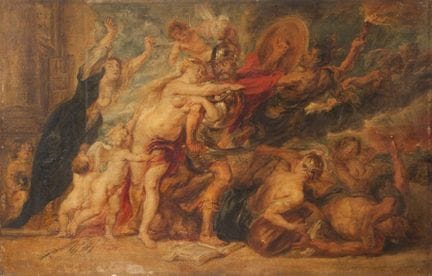
60 - D'après Pierre-Paul RUBENS (Siegen (Westphalie) 1577-Anvers 1640) Les Horreurs de la guerre. Huile sur papier. Deux feuilles juxtaposées; marouflées sur panneau. 48 x 75 cm. Petites restaurations sur le pourtour. Traces d'annotation en bas à gauche. En rapport avec la composition Les Horreurs de la guerre de Pierre Paul Rubens (Toile 206 x 342 cm) peint en 1636 et conservée à Florence au Palais Pitti. Provenance: Collection Vincent Donjeux (?-1793), sa vente, Paris (Lebrun & Paillet) 29 avril 1793, lot 118; Collections Calvière; Collection Dubois; Collection Brulé; Collection Eudoxe Marcille (1814-1890); Collection Marie Françoise Eudoxie Jahan, née Marcille (1850-1917); Geneviève Chevrier, née Jahan (1875-1956) et son mari Pierre Chevrier (1865-1938). Resté dans la descendance jusqu'à ce jour. Bibliographie: 1 - Max Rooses, L'oeuvre de Pierre-Paul Rubens: histoire et description de ses tableaux et dessins, Tome IV, p. 51, sous le n° 872/ 1 «Un second exemplaire de cette esquisse (Vélin marouflé, H. 48, L. 72) se trouve à Paris dans la collection Eudoxe Marcille». (Anvers 1886-1892); 2 - Katarina Chmelinova, On the Consequences of War by Peter Paul Rubens; note 12, p. 28 dans Quart, Nr 1 (31) 2014 (Copie du XVIIIe siècle). 3 - Corpus Rubenianum Ludwig Burchard, volume XII, Allégories et sujets littéraires, à paraître, comme copie (19) d'après la peinture de Florence (Professeur Nils Büttner) Exposition: Bruxelles, Musées Royaux des Beaux-Arts de Belgique; Août-septembre 1937; Léo van Puyvelde, Esquisses de Rubens; n°48 du catalogue, p. 56 (Bruxelles - Editions de la Connaissance). «Esquisse pour le tableau de la Galerie Pitti, de Florence (Toile 206 x 342 cm) (...) une seconde esquisse de cette composition est à la National Gallery de Londres (n° 279, pap. Marouflé, 50 x 77 cm)». Nous remercions le professeur Dr. Nils Büttner, de Stuttgart, pour la communication des informations concernant la provenance et la bibliographie de l'oeuvre.
Result
185,000 EUR
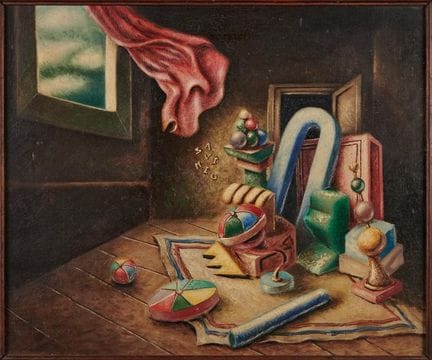
46 - Alberto SAVINIO (1891-1952) Les Prisonniers, IIème version, 1931. Huile sur toile. Signée au milieu sur le mur. Inscriptions au dos sur le châssis: «Les prisonniers (II version) Savinio 1931». 46,3 x 55,3 cm. Provenance: - Collection particulière. Bibliographie générale sur le peintre: - Pontus Hulten et Germano Celant (sous la direction de), Art italien 1900-1945, Paris, Editions Liana Levi, 1989. - Pia Vivarelli, Alberto Savinio Catalogo generale, Milano, Mondadori Electa, 1996. ALBERTO SAVINIO (1891-1952) Frère cadet de Giorgio de Chirico, Andrea de Chirico prend le pseudonyme d'Alberto Savinio pour ne pas nuire à la célébrité de son frère, inventeur de la peinture métaphysique. Tout à la fois peintre, écrivain, journaliste, auteur de théâtre, scénographe et musicien, sa créativité, son intelligence visionnaire et son humour lui ont permis de développer au cours du XXe siècle une oeuvre singulière qui obtient rapidement la reconnaissance de ses pairs. A Paris, il se lie d'amitié avec Guillaume Apollinaire et est considéré par André Breton comme l'un des précurseurs du Surréalisme. Dès 1915, Savinio participe aux recherches picturales de son frère et de Carlo Cara, inventeurs de la peinture métaphysique. Réinstallé à Paris en 1926, l'artiste s'adonne principalement à la peinture créant des oeuvres mystérieuses, fantastiques ou humoristiques qui le font considérer par les Surréalistes comme l'un des leurs. ENTRE METAPHYSIQUE ET SURREALISME: «LES PRISONNIERS, IIe VERSION, 1931». Les Prisonniers, 1931 est caractéristique de son oeuvre où l'étrangeté thématique (traduite aussi par le titre) se conjugue avec le brio et la délicatesse du pinceau. Dans une chambre à l'espace distordu, des jouets amoncelés et colorés, comme munis d'une vie propre, semblent enfermés, sans échappatoire hormis une fenêtre et une porte, l'une ouvrant sur un ciel menaçant et la seconde sur un noir d'abîme: les jouets, receleurs et symboles de nos joies d'en
Result
220,000 EUR
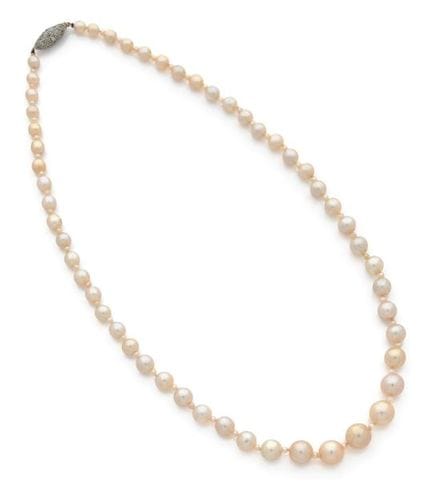
42 - Collier composé d'une chute de perles fines d'environ 5,4 à 10,2 mm, alternées de perles de semence. Il est agrémenté d'un fermoir olive à cliquet en or gris 750 millièmes, pavé de diamants taille ancienne. Travail français vers 1900. Poids brut: 32,4 g. - Long.: 54,5 cm. Pas d'indication de traitement. Il est accompagné d'un certificat LFG n° 331175 du 22.01.2018, attestant 53 perles fines d'eau de mer blanc crème.
Result
110,000 EUR
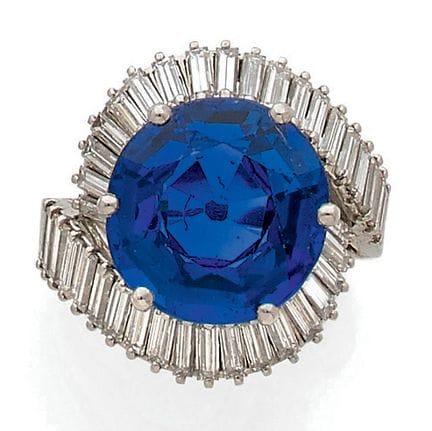
53 - BOUCHERON Monture Bague jupe en platine 850 millièmes, ornée d'un saphir rond facetté de belle couleur en serti griffe, dans un entourage de diamants taille baguette. Signée, numérotée 832.557. Vers 1960. Poids du saphir: 10,16 carats. Poids brut: 13,3 g. Tour de doigt: 47. Avec anneau de mise à grandeur. Légers manques de matière, égrisures. Le saphir est accompagné d'un certificat LFG n°331176 du 22.01.2018 attestant provenance Myanmar (anciennement Birmanie), pas de modification thermique constatée.
Result
105,000 EUR
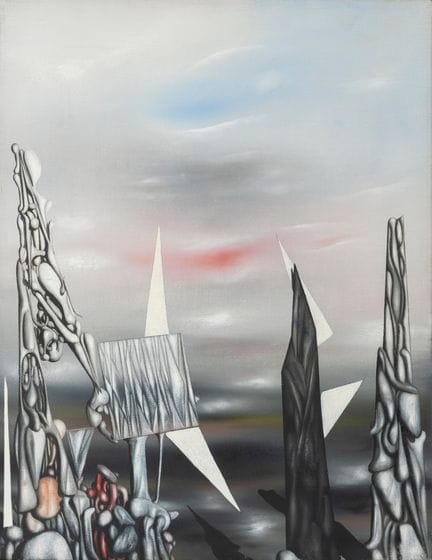
47 - Yves TANGUY (1900-1955) Elle viendra, 1950. Oil on canvas. Titled, dated and handwritten mentions on the back. 46 x 35.5 cm. Oil on canvas, titled and dated on the back. 18.1 x 13.9 in. Provenance: Collection Marie-Louise and Jehan Mayoux. Then by descent to the present owner. Bibliography: Pierre Matisse, Yves Tanguy, Un Recueil de ses œuvres, New York, Pierre Matisse, 1963, reproduced page 177 n°413. Of Breton origin, son of a military man, nothing predestines Yves Tanguy to the career we know him. Through chance encounters, he was first introduced to painting by Henri Matisse's son, Pierre, a future New York gallery owner, whom he met at the Montaigne high school. Then during his military service in Lunéville in 1920, he became friends with Jacques Prévert. But it was really in 1923 that his destiny took shape, captivated by a painting by Giorgio de Chirico: "The Brain of the Child", then exhibited in the window of the Paul Guillaume gallery. He will be a painter. Entirely self-taught, his first works are figurative (he will destroy a lot of them) but very soon he develops a very personal repertoire and style, perhaps first influenced by Spanish painters, including Miro. His vocabulary, quite quickly fixed, will remain permanent throughout his work. His aestheticism will be constant, timeless, populated with enigmatic forms both "beings-objects" or machines. He himself will agree that his painting is inexplicable. Yves Tanguy says: "Around 1924, I came across the first issue of the Surrealist Revolution and it interested me a lot. Not so much the works that were reproduced in it but the general spirit of the content". The link with the surrealists was soon to be forged. During a dinner in 1925 at the Café Cosmos, he became friends with Robert Desnos and soon met Benjamin Péret and Aragon. His greatest friend will be André Breton, his guide and mentor, replacing his father who died very early. From 1926, one of his works is reproduced in The Surrealist Revolution and his paintings exhibited at the Surrealist Gallery. In 1927 a personal exhibition is dedicated to him. He took part in all the demonstrations of the movement, in the surrealist games and illustrated numerous texts. In spite of everything, his situation remains difficult and he lives with his wife Jeannette in a very modest hotel. After a trip to North Africa in 1930 and 1931, which is not very well documented, Tanguy paints a series of flat landscapes that occupy a special place. Then he returns to a new organization of his compositions. The forms no longer proliferate but are arranged in alignment in the foreground. The unfailing friendship between Yves Tanguy and the Mayoux couple began in 1933. Jehan Mayoux makes contact that year with André Breton and Paul Eluard. He takes part in the activities of the surrealists' group, collaborates in magazines and signs the collective texts. In 1935, Tanguy spends his summer holidays with Marie-Louise and Jehan Mayoux. Declared unfit for mobilization he leaves in 1940 for New York, officially to exhibit at the Pierre Matisse Gallery, unofficially to join the painter Kay Sage whom he met in Paris and who influenced the organization of this exhibition. He married her in 1940. The couple moved to Connecticut. Pierre Matisse provides him with a relative material security thanks to a monthly annuity in addition to the sales. Tanguy's painting is no more successful in the United States than in France. It is far too interior to reach a wide audience. Yves Tanguy's inner world. The aim of surrealist painting is not to fix in trompe l'oeil images of dreams, but to express through pictorial means "the functioning of thought" (according to André Breton), which means the unconscious functioning of thought. Tanguy works the subject no less than his shadow, without really knowing where the light comes from. The shadow underlines the palpable reality of the object, but it is impalpable by nature. It attaches itself to the forms and not to the background, refusing the sky-earth cut. His landscapes do not offer a horizon line. Aerial space and terrestrial space merge. There is only Tanguy's space and within it germinate creatures, "object beings" as Breton will call them. They require all the care of their creator. Tanguy brushes them with delicate attention and great precision. They evoke a mineral world, or petrifications, but always escape all resemblance. Tanguy develops his inner world fed by his childhood memories in Brittany. But it is well and truly the end of identifiable organic survivals, the subtle movement of the beginnings gives way to an immobility that invades the painter's paintings. The "object beings" grow in number, importance and complexity. Tanguy always works in the same way
Result
720,000 EUR
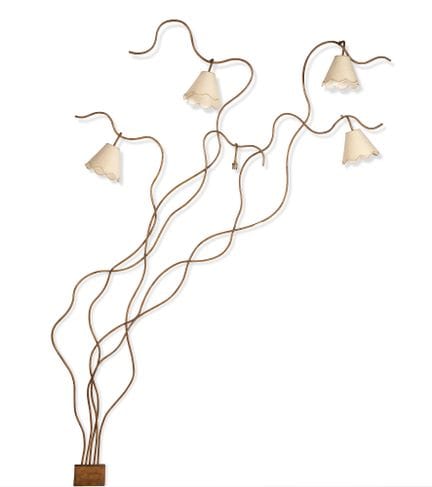
72 - Jean Royère (1902-1981) Floor lamp model Liane with five lights, circa 1960. In metal with golden patina. H.: 231 cm - W.: 178 cm - D.: 14 cm. Stains, scratches, welds and oxidation. Patinated metal wall lamp. 90.9 x 70 x 5.5 in. Provenance: French private collection. "I've seen living rooms where ivies go around the walls several times zigzagging around paintings and mirrors, and dining rooms where the Virginia creeper descends into chandeliers." Jean Royère, Notes de voyages d'un décorateur français en Scandinavie, "Le Décor d'aujourd'hui", n° 53, 1949. Bibliography: J.Lacoste and P. Seguin, Jean Royère, Galerie Jacques Lacoste-Galerie Patrick Seguin, Paris, 2012, vol. 1, pp. 6-7, 29-30, 56-57, 60-67, 266, vol. 2, 30-31, 84. Pierre-Emmanuel Martin-Vivier, Jean Royère, Norma, Paris, 2017, p. 283. Jean Royère, catalogue des galeries Jacques Lacoste et Patrick Seguin, vol.2, Paris, 2012, pp. 30-31. Yolande Amic, Intérieurs le mobilier français 1945-1964, éd. du Regard, Paris, 1983, p. 39. Bruno Foucart and Jean-Louis Gaillemin, Les décorateurs des années 40, éd. Norma, Paris, 1998, p. 260. Jean Royère décorateur à Paris, exhibition catalogue, Musée des Arts Décoratifs, Paris, 8 October 1999-30 January 2000, pages 26 and 77. Pierre-Emmanuel Martin-Vivier, Jean Royère, éd. Norma, Paris, 2002, pp. 265, 268-269, 274.
Result
380,000 EUR
Do you have an item you'd like to have appraised?
Request a free appraisal on our website!
Our experts are here to appraise all types of items: jewelry, design pieces, furniture, works of art… and much more!