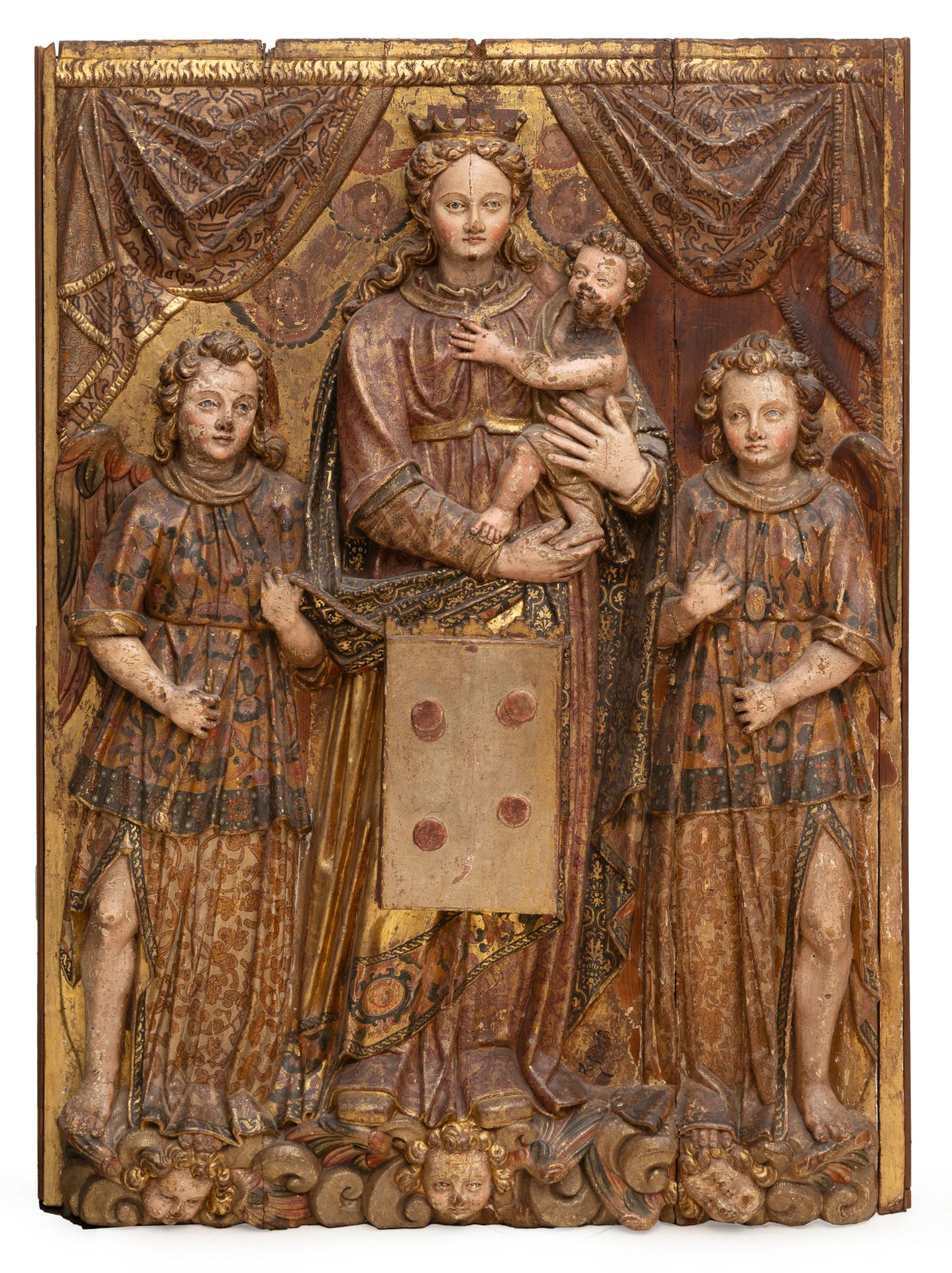
Large carved, polychromed and gilded softwood panel depicting the Virgin and Child surrounded by two angels. Standing on clouds from which emerge cherubs' heads, the crowned Virgin carries the Child on her left side, while two angels on either side hold in their hands the cords from which hangs the Holy Corporal of Daroca; hangings in the spandrels. Aragon, Saragossa, early 17th century H.: 130 cm - W.: 96.5 cm - Thickness: 12 cm Slight accidents and small restorations. The iconography of this beautiful panel alludes to an episode of the Reconquista that took place in the town of Daroca, near Saragossa in Spain, called the "Miracle of the Eucharist". In 1239, six Christian captains decided to reconquer the castle of Chio Luchente in Aragon, with the support of neighboring towns. During the mass preceding the assault, the priest of Daroca consecrated six hosts before the ceremony was interrupted by an enemy attack. To avoid sacrilege, the priest wraps the hosts in a corporal and hides them in the rock. After repelling the attackers, the Christians discover the blood-stained hosts in the white corporal, which is interpreted as a miracle. The captains then used the corporal as a standard when reconquering the castle. After the victory, to decide where the hosts and corporal should be kept, a mule carrying the relics is set free across the countryside. It finally collapsed in front of the church in Daroca, where a chapel was built to house the sacred linen. The miracle of Daroca has been officially recognized since 1340, and the corporal is still venerated there in a reliquary placed beneath a Virgin and Child framed by two angels bearing a representation of the relic, similarly to this panel. The chapel walls are carved with bas-reliefs depicting various scenes from this Eucharistic miracle, and the corporal is featured on the coat of arms of the town of Daroca.
Estimate
€12,000 - €15,000
Result
Not communicated
Buyer's premium
25%
Large carved, polychromed and gilded softwood panel depicting the Virgin and Child surrounded by two angels. Standing on clouds from which emerge cherubs' heads, the crowned Virgin carries the Child on her left side, while two angels on either side hold in their hands the cords from which hangs the Holy Corporal of Daroca; hangings in the spandrels.
Aragon, Saragossa, early 17th century
H.: 130 cm - W.: 96.5 cm - Thickness: 12 cm
Slight accidents and small restorations.
The iconography of this beautiful panel alludes to an episode of the Reconquista that took place in the town of Daroca, near Saragossa in Spain, called the "Miracle of the Eucharist". In 1239, six Christian captains decided to reconquer the castle of Chio Luchente in Aragon, with the support of neighboring towns. During the mass preceding the assault, the priest of Daroca consecrated six hosts before the ceremony was interrupted by an enemy attack. To avoid sacrilege, the priest wraps the hosts in a corporal and hides them in the rock. After repelling the attackers, the Christians discover the blood-stained hosts in the white corporal, which is interpreted as a miracle. The captains then used the corporal as a standard when reconquering the castle. After the victory, to decide where the hosts and corporal should be kept, a mule carrying the relics is set free across the countryside. It finally collapsed in front of the church in Daroca, where a chapel was built to house the sacred linen. The miracle of Daroca has been officially recognized since 1340, and the corporal is still venerated there in a reliquary placed beneath a Virgin and Child framed by two angels bearing a representation of the relic, similarly to this panel. The chapel walls are carved with bas-reliefs depicting various scenes from this Eucharistic miracle, and the corporal is featured on the coat of arms of the town of Daroca.
Sale
Friday 7 June 2024・14:00 (Europe/Paris)
Salle 6 - Hôtel Drouot
9, rue Drouot
75009 Paris